Interview
Palpa Team
United States
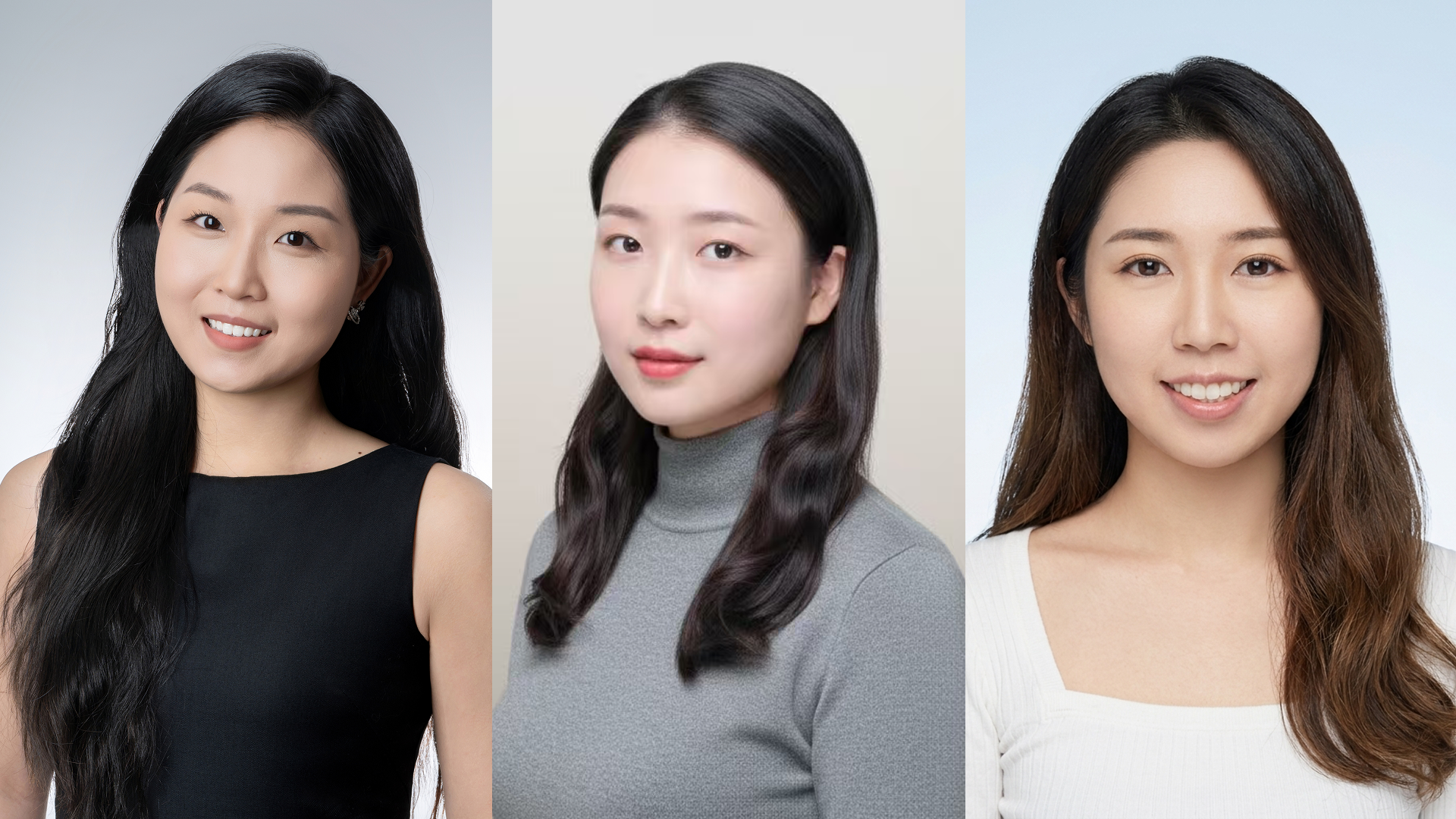
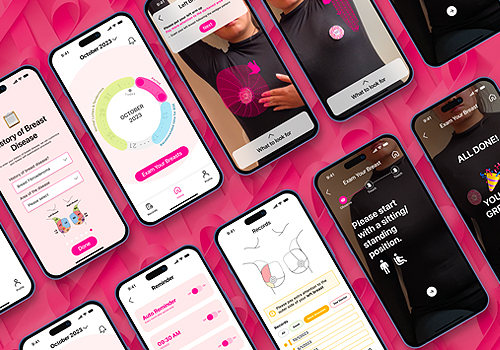
Yijing (Jennie) Wang, Yijun (Claire) Huang, and Jinghan (Jenna) are designers committed to making healthcare more accessible through technology. Together, they created Palpa: AR-Integrated App for Breast Self-Examination, an innovative solution that supports more proactive preventive care.
1 Please provide us a brief bio of yourself and your health industry background.
Jennie: My name is Yijing (Jennie) Wang, a product and UX designer based in New York. My background combines industrial design and digital product design, and I am particularly interested in using emerging technologies to improve healthcare accessibility and preventive care. Claire: My name is Yijun (Claire) Huang, a UX designer based in the San Francisco Bay Area. My background is in Human-Computer Interaction, and I am particularly interested in bridging the gap between physical hardware and digital software through accessible, AI-driven experiences. Jenna: My name is Jinghan (Jenna), a UX designer based in Atlanta with a background in user-centered design and human-computer interaction. I am passionate about applying design and technology to healthcare, creating solutions that enhance patient experiences and support more effective, empathetic care.
2 What motivated you to pursue this particular health initiative, and what impact has it had on individuals or communities?
We were motivated by the gap between medical knowledge and everyday awareness, particularly in preventive care. Many people lack the confidence or guidance needed to perform self-checks effectively. This project aims to lower that barrier by making the process more intuitive and accessible. It helps users build awareness and encourages a more proactive approach to their health.
3 Can you share a specific story or testimonial that exemplifies the positive impact your project has had on an individual or community?
During early testing, users reported feeling more confident performing self-exams when guided by visual and spatial feedback. One user mentioned that it transformed an uncertain and uncomfortable process into something structured and manageable, which served as a strong validation of the design direction.
4 What inspired you to create this health-related creative project, and what message or impact were you aiming to convey?
The project was inspired by the belief that prevention should be accessible rather than intimidating. We wanted to show that health awareness can be integrated into everyday life through thoughtful design, rather than relying solely on clinical environments.
5 What unique artistic or creative elements did you utilize to communicate the health message or story?
We used augmented reality to map guidance directly onto the user’s body, combined with subtle animations and visual cues to support interaction. The design emphasizes clarity, reassurance, and minimal cognitive load.
6 How does your creative project contribute to raising awareness, promoting behaviour change, or improving health outcomes?
By making self-examination more understandable and approachable, the project encourages users to develop consistent habits. It shifts the experience from uncertainty to guided interaction, which is essential for promoting long-term behavioral change.
7 What unique and compelling elements did you incorporate into your advertising materials to capture attention and deliver the health message effectively?
We focused on visual storytelling by demonstrating how the interaction works rather than simply explaining it. The use of AR visualization immediately communicates the product’s value and distinguishes it from traditional health education methods.
8 Congratulations! As a winner of the TITAN Health Awards, what does it mean to you, your company or team to receive this award distinction?
It is a strong validation of the belief that design can play a meaningful role in preventive healthcare. It also reinforces the importance of interdisciplinary collaboration across technology, design, and healthcare.
9 Can you explain a bit about the winning work you entered into the TITAN Health Awards, and why you chose to enter this project?
The project is an AR-assisted breast self-exam tool designed to guide users through a structured and informed process. We chose to enter it because it represents a meaningful intersection of design, technology, and real-world impact.
10 What was the biggest challenge with this project?
The biggest challenge was balancing medical accuracy with usability. The experience needed to be precise enough to be credible, yet simple enough for everyday users to adopt.
11 How has winning an Award developed your practice/career?
It has strengthened my confidence in pursuing work at the intersection of design and impact, and encouraged me to continue exploring beyond traditional product boundaries.
12 What are your top three (3) things you think is unique about the health industry?
- High stakes: Design decisions directly impact human well-being. - Complexity: Success requires balancing technical, medical, and human factors. - Trust: Users rely on clarity and credibility more than aesthetics.
13 What makes your country unique in the health industry?
Working in the U.S., we see a strong intersection of innovation, technology, and healthcare. There is a growing focus on preventive care and digital health solutions, creating opportunities for design to play a larger role.
14 Where do you see the evolution of the health industry going over the next 5-10 years?
We see a shift toward more personalized, proactive, and technology-driven care. AI and real-time data will play an increasingly important role, but usability and trust will remain critical factors.
15 What resources would you recommend to someone who wants to improve their skills in the health industry?
- Interdisciplinary learning across design, medicine, and technology. - Real-world case studies in digital health. - Hands-on experimentation with emerging technologies such as AI and AR.
16 Who has inspired you in your life and why?
We are inspired by people who work across disciplines and bring diverse fields together to solve complex problems. Their ability to navigate ambiguity and create meaningful impact is something we deeply value.
17 What is your key to success? Any parting words of wisdom?
Staying curious and becoming comfortable with ambiguity. The most meaningful work often comes from exploring problems that do not have clear answers.
18 Do you have anything else you would like to add to the interview?
We believe design has the potential to make healthcare more accessible, understandable, and human-centered. This is an area where we hope to continue making meaningful contributions in the future.