Interview
Sreenivasa Sola
United States
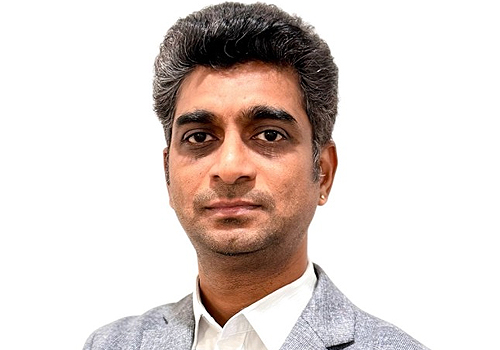
Sreenivasa Rao Sola is a seasoned ERP Technology Leader and Senior Manager in Enterprise Application Management, with over two decades of experience driving Oracle ERP implementations, solution architecture, and digital transformation across the manufacturing sector. Known for aligning technical and functional solutions with business strategy, he focuses on optimizing operations through AI-integrated ERP systems and scalable enterprise platforms.
1 Please provide us a brief bio of yourself and your health industry background.
Thank you for giving me the opportunity to introduce myself. I am Sreenivasa Rao Sola, and I am currently a Senior Manager in Enterprise Application Management Services and an ERP Technology Leader at one of the leading American manufacturing companies in its respective industry. Having over 20 years of experience in the Information Technology industry, I possess experience in Oracle ERP (both On-Premise and Cloud) applications, program and project management, solution architecture, digital transformation, and AI-based ERP solutions. In addition to my leadership roles, I am also highly interested in recommending technical and functional solutions that enable business operations improvement and building a solid platform for running efficient and effective business processes.
2 What motivated you to pursue this particular health initiative, and what impact has it had on individuals or communities?
The motivation for pursuing AI-based predictive maintenance in manufacturing is to reduce inefficiencies in operations, reduce downtime, and lowering costs for the industry. The traditional maintenance approaches are likely to cause unexpected breakdowns and increased costs, and as such, will slow down production. Using the Oracle Cloud ERP with the inclusion of AI, the solution enables preventive maintenance, improving equipment and process performance and reducing equipment downtime by a significant amount. The impact on manufacturers has been transformative—saving costs, being more efficient, and having longer asset life, ultimately driving the competitiveness of and long-term sustainability.
3 Tell us more about your business/company, your job profile, and the specific responsibilities you undertake.
As I mentioned, I work for one of America’s leading manufacturing companies in its area of business, and I focus on delivering the Oracle ERP-driven solution, AI-driven solutions as a technology leader, and providing my services in running enterprise applications management services to assist the business operations with the IT solutions. Manage Global IT Operations and Project Development teams and continuously research and bring out the publishing in my area of expertise.
4 Can you share a specific story or testimonial that exemplifies the positive impact your project has had on an individual or community?
One of the finest AI-based predictive maintenance examples is a factory that adopted this option to reduce frequent unplanned shutdowns and crisis repair costs. By using AI in their Oracle Cloud ERP infrastructure, the factory was able to predict equipment failure and schedule it during planned shutdowns. This shift from reaction to preventative maintenance saved significant repair costs, raised worker morale, and enhanced working efficiency, creating a more stabilized and productive labor force for workers as well as the broader manufacturing community.
5 What inspired you to create this health-related creative project, and what message or impact were you aiming to convey?
The concept of this project was conceived from the ongoing challenge of the manufacturing industry to maintain operational efficiency with minimized downtime. Traditional maintenance approaches, like reactive and preventive approaches, have the tendency to lead to unplanned breakdowns, which not only escalate operational costs but also disrupt production schedules. This inefficiency has a potential cascading impact on employees, businesses, and societies. By adding AI-driven predictive maintenance to Oracle Cloud ERP, I aimed to address such issues by enabling manufacturers to detect equipment failures before they happen, shifting from reactive to proactive maintenance. The overall message in this endeavor is that the application of cutting-edge technology, such as AI and machine learning, can transform industries and enhance both operational efficiency and affordability. The transformation I sought to achieve is a more streamlined, reliable production process that not only reduces costs but also improves the working conditions of individuals in the field, greatly contributing to higher productivity and job satisfaction.
6 What unique artistic or creative elements did you utilize to communicate the health message or story?
Although the project doesn’t regard classical forms of art, it is innovative in the way that it integrates some of the newest technologies such as AI, machine learning, and IoT sensors, into the Oracle Cloud ERP system to deliver a powerful message. Artistry is in how those technologies are integrated to tell the story of predictive maintenance in manufacturing. By exposing real-time data and predictive analytics through simple-to-use dashboards and alerts, the system translates raw data into actionable intelligence, allowing stakeholders to proactively make informed decisions. This 'innovative' use of data storytelling not only communicates the value of maintenance optimization but also demonstrates how AI can revolutionize industries, reduce downtime, and increase operational efficiency. The story is conveyed in insights derived from the data that allows the manufacturers to own their processes in a way that was previously impossible.
7 How does your creative project contribute to raising awareness, promoting behaviour change, or improving health outcomes?
While this is a project on manufacturing operational efficiency instead of health specifically, it does improve the "health" of manufacturing systems in terms of reducing downtime and preventing equipment failure. By raising more awareness about the benefits of AI-driven predictive maintenance, the project encourages manufacturers to shift from reactive to proactive maintenance strategies. This behavioral shift leads to more predictable production operations, reduced operational costs, and fewer emergency repairs, which add to the sector's overall efficiency and sustainability. Through this transformation, the project contributes to the creation of healthier, stronger manufacturing ecosystems to the benefit of both the sector and the workers.
8 What unique and compelling elements did you incorporate into your advertising materials to capture attention and deliver the health message effectively?
I featured aesthetically stimulating aspects, bringing to the foreground the powers of predictive, transformative AI-led maintenance in our campaign materials. Real-time visualizing of data, dynamic graphics and charts, IoT sensor visualizations were incorporated to show that uniting Oracle Cloud ERP and AI is conceivable, so that breakdown predictions and failure aversion through combining AI capabilities become feasible with consequent 'preservation of the health' for manufacturing ecosystems. I also emphasized the cost-saving and efficiency advantages, presenting these as concrete benefits to manufacturers. To make the message more accessible, we employed success stories and real-life examples that demonstrated how this groundbreaking approach improves the operational 'health' of factories as well as the work environment of employees. This blend of evidence-based visuals and real-world impacts was intended to raise an eyebrow and express the need to accept AI in order to optimize maintenance strategies.
9 Congratulations! As a winner of the TITAN Health Awards, what does it mean to you, your company or team to receive this award distinction?
It's a great honor for me to receive the TITAN Health Awards. It's a recognition that our efforts to promote innovation and enhance operational efficiency in manufacturing through AI-driven predictive maintenance do pay off. For our business, this award once again attests to our commitment to leveraging cutting-edge technology to enable digital transformation and provide real, tangible benefits to manufacturers. It motivates me to continue pushing the frontiers of what technology can do to make industry more efficient, reduce costs, and ultimately make industries more resilient and sustainable.
10 Can you explain a bit about the winning work you entered into the TITAN Health Awards, and why you chose to enter this project?
The winning project addresses the implementation of AI-driven predictive maintenance on Oracle Cloud ERP platforms to minimize inefficiencies in manufacturing. By leveraging IoT sensor real-time data and machine learning, the solution enables manufacturers to predict equipment failure prior to its occurrence, saving downtime and improving operational efficiency. I submitted the project because it is a vital step towards the revolution of maintenance processes, from reactive to proactive processes. The project not only improves the 'health' of manufacturing systems but also brings cost savings, enhanced productivity, and sustainability in business. I view this solution as impactful and aligned with the mission of the TITAN Health Awards in recognizing revolutionary, innovative work.
11 What was the biggest challenge with this project?
The biggest challenge was integrating AI-driven predictive maintenance into the existing Oracle Cloud ERP system without glitches. It included overcoming issues such as data quality, system integration, and AI model scalability. Organizational change was also needed to adopt new technologies, as the majority of manufacturers were accustomed to traditional maintenance approaches. Overcoming these issues involves interdepartmental coordination and careful planning to enable smooth implementation and maximum impact.
12 How has winning an Award developed your practice/career?
Winning the TITAN Health Awards has been a career game-changer by validating the potential of innovative technologies to impact the manufacturing sector. It has opened up possibilities for new partnerships with industry leaders and positioned me as a subject matter expert in AI and predictive maintenance integration. It has also given me increased confidence to develop further technological breakthroughs and inspires me to continue pushing the boundaries of what is possible when it comes to making industries more efficient and sustainable. It's a wonderful reminder of the strength of innovative thinking and its potential to transform entire industries.
13 What are your top three (3) things you think is unique about the health industry?
Firstly, the manufacturing industry is becoming more reliant on data from inputs like IoT sensors and AI to predict and prevent issues before they happen, improving outcomes and operational efficiency. Secondly, Interdisciplinary Collaboration Success innovations depend upon the collaboration of different departments such as operations, technology, and management, so that the integration is smooth, and solutions are comprehensive. Lastly, Proactive Solution Orientation, the industry is shifting towards more proactive solutions, such as predictive maintenance for manufacturing, not only for reducing costs but also for a more sustainable, long-term approach to operational health.
14 What makes your country unique in the health industry?
The United States stands out in the sector due to its keen focus on introducing highly advanced technologies, such as AI and data analytics, into healthcare systems. Predictive solutions, similar to predictive maintenance in manufacturing, are now the focus to make healthcare more efficient and provide improved patient outcomes. In addition, collaboration between technology and industry stakeholders has facilitated breakthroughs in devices used to enhance operations.
15 Where do you see the evolution of the health industry going over the next 5-10 years?
Over the next 5-10 years, in manufacturing industry will likely see a significant shift towards AI-driven solutions and predictive analytics, similar to the trends in manufacturing. We’ll see more personalized and proactive solutions, with data from IoT devices and wearable technology being used to predict and prevent health issues before they occur. Additionally, the integration of AI with cloud-based systems will improve decision-making, operational efficiency, and patient outcomes. Overall, the focus will be on leveraging technology to drive preventive care, reduce costs, and enhance overall healthcare sustainability.
16 What resources would you recommend to someone who wants to improve their skills in the health industry?
I would recommend focusing on courses that combine healthcare and technology, such as AI, data analysis, and health management courses online. Refer to Learning all offer courses in AI in healthcare, predictive analysis, and health informatics. You can also keep up to date with current innovations by participating in industry conferences across the globe. Network with technology experts, as well as learning how to integrate emerging technologies into healthcare systems in the most efficient manner.
17 Who has inspired you in your life and why?
I've been highly impressed by innovators who combine technology with real-world problem-solving. All stories of the ability to push boundaries and transform industries through technology inspire me to think creatively about how we can leverage tech to improve systems, whether in healthcare, manufacturing, or other sectors. Refusal to accept the status quo, even when faced with challenges, inspires me to continue looking for innovative solutions and working towards having a meaningful impact in my own sphere.
18 What is your key to success? Any parting words of wisdom?
My success secret is the relentless pursuit of innovation and collaboration. Embracing new technologies and being near to others to solve complex problems has been core. My words of advice in leaving would be: Always stay curious, see obstacles as opportunities to learn, and never undervalue persistence as a way to drive meaningful change.
19 Do you have anything else you would like to add to the interview?
I want to emphasize the importance of continuous innovation and cross-industry collaboration to bring about positive change. The intersection of new technologies, including AI and data analytics, can transform sectors like manufacturing to make them more effective and efficient. I'm excited to be along for the ride and am eager to find new ways of using technology for good and offer my thanks to TITAN Awards for all the recognition.