Interview
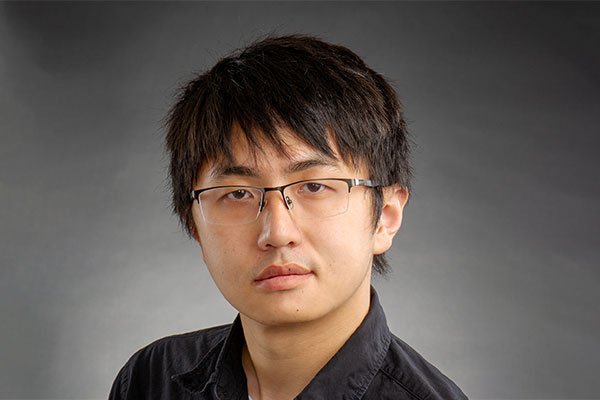
Zhaowen Luo
St. Jude Children’s Research Hospital, United States
Zhaowen Luo is a scientific animator and illustrator at St. Jude Children’s Research Hospital. With training in clinical medicine and biomedical visualization, he creates clear, accurate visuals that help researchers communicate complex ideas in studies published in Science, Nature, Cell, and related journals.
1 Please provide us a brief bio of yourself and your health industry background.
I’m a scientific animator and illustrator at St. Jude Children’s Research Hospital. I translate complex biomedical data into clear, accurate visual stories for research communication and public understanding. My work supports studies published in Science, Nature, Cell, and related journals. I first trained in medicine, completing a Bachelor’s and an Academic Master’s in Clinical Medicine at the Medical School of Nanjing University. I later completed a second Master’s in Biomedical Visualization at the University of Illinois Chicago—one of only five accredited programs of its kind in North America. That dual training guides everything I create.
2 What motivated you to pursue this particular health initiative, and what impact has it had on individuals or communities?
There’s often a gap between groundbreaking discoveries and how they’re understood beyond specialist circles. My goal is to remove that barrier, turning dense, high-impact scientific findings into visuals that help researchers align faster, support clinical and educational contexts, and make complex mechanisms accessible without sacrificing accuracy.
3 Tell us more about your business/company, your job profile, and the specific responsibilities you undertake.
St. Jude Children’s Research Hospital is a leading nonprofit institution focused on advancing cures for pediatric cancer and other catastrophic diseases. As a scientific visualization engineer within the Department of Structural Biology, I contribute to high-impact biomedical research by creating figures, illustrations, and animations for manuscripts, presentations, and digital platforms. These visual assets are developed in close collaboration with PIs and their teams to ensure scientific accuracy and clarity. By enhancing communication and accelerating team alignment, my work supports the translation of complex structural data into actionable insights for research and clinical application.
4 Can you share a specific story or testimonial that exemplifies the positive impact your project has had on an individual or community?
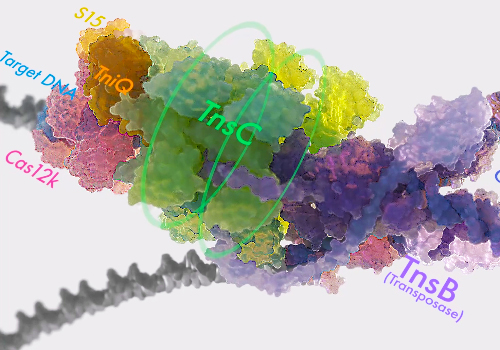
My TITAN Health Awards–winning animation “Insights into Vesicular Monoamine Transporter 2” has had a measurable impact both in practice and among peers, as reflected by its BioImages 2025 recognition. The piece was created specifically to explain VMAT2’s role in brain function to audiences unfamiliar with the topic, turning dense structural biology into a replayable, shared mental model for seminars and conferences. The BioImages win served as third-party validation within the scientific animation community that the piece balances atomistic rigor with narrative clarity and is purpose-built for slide-based research communication, which aligns directly with the use case BioImages outlines for this category of work.
5 What inspired you to create this health-related creative project, and what message or impact were you aiming to convey?
The piece is inspired by the 2023 Nature study resolving VMAT2 in distinct conformations and in complex with key ligands. The intended message is that rigorous structural insights can be made more accessible: show the state changes over time, connect them to function, and make drug stabilization of states intuitive so scientists can reach meaningful discussion faster.
6 What unique artistic or creative elements did you utilize to communicate the health message or story?
I mix atomic-detailed molecular machine models with a cinematic touch, using lighting, motion, and pacing to guide the viewer’s eye and make the science feel intuitive rather than overwhelming.
7 How does your creative project contribute to raising awareness, promoting behaviour change, or improving health outcomes?
Good visuals make science easier to understand. In fields like structural biology, they help researchers and clinicians quickly get on the same page and make complex discoveries easier to share in talks, papers, and collaborations. By turning dense data into clear, engaging visuals, I help important research reach more people and make a stronger impact.
8 What unique and compelling elements did you incorporate into your advertising materials to capture attention and deliver the health message effectively?
For public or conference presentations, I use animated human figures to show how neurological disorders affect behavior. Simple typography and clean motion graphics help keep the content easy to follow, allowing viewers to grasp key ideas quickly without feeling overwhelmed.
9 Congratulations! As a winner of the TITAN Health Awards, what does it mean to you, your company or team to receive this award distinction?
I’m really honored. This kind of recognition shows that visuals aren’t just a nice extra; they’re a core part of how science is shared and understood today. It also reinforces something I deeply believe: bringing visual storytelling into research early on helps teams communicate more effectively and make a stronger impact.
10 Can you explain a bit about the winning work you entered into the TITAN Health Awards, and why you chose to enter this project?
I entered it because the scientific discovery behind this animation is significant in both structural biology and neurological research, and because it clearly represents the kind of work I do as a biomedical visualizer.
11 What was the biggest challenge with this project?
The hardest part was finding the right balance between clarity and uncertainty. When you're animating something at the atomic level, it's easy to make guesses look like established facts. I had to be very intentional about showing what is known and making it clear where the science is still evolving.
12 How has winning an Award developed your practice/career?
Winning this award has definitely helped get my work noticed, both inside and outside my institution. It has opened up new collaborations and made it easier to show why visual storytelling should be part of research. I’m now fully booked with exciting projects, and there’s even more on the horizon.
13 What are your top three (3) things you think is unique about the health industry?
– It is one of the most essential industries in human society. – It is very evidence-based and heavily regulated. – Interdisciplinary teams in science, design, data, and clinical practice produce the most durable solutions.
14 What makes your country unique in the health industry?
I am currently based in the U.S., even though I’m originally from China. China has one of the largest health-industry markets in the world, which makes its regulatory landscape highly influential even beyond its borders.
15 Where do you see the evolution of the health industry going over the next 5-10 years?
With the rapid development of AI, it is challenging to predict how the industry will evolve. However, I believe visualization as a tool for biomedical communication will continue to be essential.
16 What resources would you recommend to someone who wants to improve their skills in the health industry?
If you are a scientific visualizer, the Association of Medical Illustrators is a great community for staying connected with peers. Because our profession is so specialized, it’s difficult to grow without communicating and sharing knowledge with others in the field.
17 Who has inspired you in your life and why?
I’m inspired by people who care deeply about both accuracy and empathy—scientists and educators who understand that being understood is just as important as being correct.
18 What is your key to success? Any parting words of wisdom?
Start with what you want people to learn and the evidence behind it. Build the story around key moments, clearly show what is measured versus what is modeled, and design to address common misunderstandings. Then test it with experts. When the message is clear, the science goes further.
19 Do you have anything else you would like to add to the interview?
This project shows how digital storytelling can make even the most complex molecular biology feel clear and memorable. Integrating visualization early benefits investigators, clinicians, trainees, and the communities we serve.