Interview
Xenia Xie and Maitao Guo
Perle Studio, Canada
Xenia Xie and Maitao Guo are the co-founders of Perle Studio, a creative practice focused on designing digital solutions that address critical healthcare challenges, particularly in mental health. Drawing from their backgrounds in UX, product design, and interactive technologies at companies like Amazon, Meta, and Indeed, they combine human-centered design with AI and responsive systems to create accessible tools that support emotional well-being and healthier digital experiences.
1 Please provide us a brief bio of yourself and your health industry background.
Xenia (Siwen): Hi, my name is Xenia (Siwen) Xie, and I’m the lead designer and co-founder of Perle Studio. I have over seven years of experience in UX and product design, working across enterprise platforms, healthcare innovations, and AI-powered experiences. I hold an MLA degree from the Harvard Graduate School of Design, where I focused on experience design, environmental systems, and emerging technologies. Professionally, I’ve designed for some of the world’s leading companies, including Amazon, Lululemon, and Indeed. My work is grounded in creating thoughtful, human-centered experiences that bridge complex systems with emotional intelligence. Maitao: I’m Maitao Guo, co-founder and creative technologist at Perle Studio. I hold an MAUD degree from Harvard University and a Master’s in Computer Science from the University of Illinois Urbana-Champaign (UIUC). My professional background includes working at Meta as a software engineer, where I focused on building next-generation interactive systems. My practice is rooted in combining technical innovation with artistic exploration—using AI, machine learning, and responsive environments to craft meaningful digital experiences. Together: Throughout our professional experiences in North America, we've observed significant challenges within the healthcare system, particularly in mental health services. The COVID-19 pandemic exacerbated these issues, leading to a 25% increase in the global prevalence of anxiety and depression. In the U.S., nearly 22% of adults received mental health treatment in 2021, up from about 19% in 2019. Additionally, during the pandemic, 41% of U.S. adults experienced high levels of psychological distress at least once. Recognizing this growing need, we founded Perle Studio in 2024 to leverage our expertise in design and technology to address these pressing healthcare challenges. Our mission is to develop innovative, user-centered solutions that enhance mental well-being and provide accessible support to those in need.
2 What motivated you to pursue this particular health initiative, and what impact has it had on individuals or communities?
Our motivation for this health initiative stemmed from a deep concern for the emotional toll modern life takes on individuals—especially in the wake of the pandemic. We both experienced, witnessed, and heard stories of burnout, anxiety, and isolation affecting not just friends and colleagues, but entire communities. Despite the growing demand for mental health care, many people still face barriers like stigma, high costs, or lack of access to resources. We felt a strong calling to address this gap using our combined backgrounds in design, technology, and systems thinking. In 2025, we created Sonara – an AI-powered emotional wellness companion—a digital tool designed to gently support users in moments of stress, self-reflection, or emotional overwhelm. Sonara uses natural language processing and empathetic design to offer calming interactions, emotional tracking, and daily check-ins. Rather than replacing professional care, it serves as a bridge—encouraging emotional awareness and offering support when it’s most needed. Throughout our creation process, we conducted user testing and interviews to better understand how individuals relate to digital wellness tools. We’ve seen Sonara bring comfort to users navigating a wide range of emotional experiences—from daily stress and burnout to grief and self-doubt. Many users shared that Sonara made them feel “heard,” “less alone,” and more emotionally aware. These insights reaffirm our belief in the power of small, thoughtful interventions to make a meaningful difference in people’s lives. We're continuing to iterate based on real-world feedback, and we’re excited to expand access to compassionate mental wellness support across diverse communities.
3 Tell us more about your business/company, your job profile, and the specific responsibilities you undertake.
Xenia (Siwen): I’m the lead designer and co-founder of Perle Studio, where I oversee experience strategy, design direction, and product development. My role involves working closely with both users and technical teams to ensure that our digital products are not only functional but also emotionally resonant and accessible. I lead user research, wireframing, prototyping, and design testing, while also shaping the overall vision and storytelling behind each product we create. My goal is to bridge systems thinking with human needs—bringing clarity, warmth, and purpose to complex digital experiences. Maitao: As co-founder and creative technologist at Perle Studio, I lead the development of interactive systems, prototypes, and product infrastructure. My responsibilities range from coding and building AI-powered features to exploring emerging technologies like machine learning, spatial computing, and responsive environments. I also lead technical architecture, integrate APIs and data pipelines, and ensure scalability and security for our platforms. At the intersection of art and engineering, my focus is on turning abstract ideas into real-time, impactful user experiences. About Perle Studio: Founded in 2024, Perle Studio is a design and technology studio dedicated to using creativity as a catalyst for transformation. Our focus spans environmental sustainability, urban technology, and personal wellness—with a strong emphasis on emotional and mental health. We collaborate with clients, communities, and industry leaders to co-create forward-thinking solutions through workshops, consulting, and digital product development. Our approach is highly interdisciplinary: we integrate design, behavioral science, and emerging tech to address systemic challenges and spark meaningful change.
4 Can you share a specific story or testimonial that exemplifies the positive impact your project has had on an individual or community?
One story that stands out comes from Sarah, one of our early user testing participants. During the product development process, Sarah provided invaluable feedback on Sonara and its features. After several weeks of testing, she reached out to us, eagerly asking when she would be able to use the product once it was officially launched. Sarah mentioned that the daily check-ins and the emotional guidance Sonara offered had already made a noticeable impact on her routine, and she found herself looking forward to her sessions with the app. Sarah said, "I never realized how much I needed a space to check in with my emotions until I started using Sonara. It’s been such a comforting tool for managing stress and just taking a pause in my busy day. I can’t wait for the official release—it’s already helping me feel more grounded." This moment really underscored the potential Sonara had to offer, as it highlighted how early users were already finding tangible benefits from the product, even in its development phase. It was especially rewarding to see the positive response from someone who had experienced the ups and downs of our iterative process, confirming that our vision for accessible emotional wellness was beginning to resonate with people.
5 What inspired you to create this health-related creative project, and what message or impact were you aiming to convey?
The inspiration for Sonara came from a deep recognition of the growing mental health crisis, particularly in the wake of the COVID-19 pandemic. As we observed the strain on healthcare systems and the increasing need for mental health support, we felt compelled to use our expertise in design and technology to create a solution that could address this urgent need. Both of us have a strong passion for human-centered design, and throughout our professional journeys, we've seen how people are often overwhelmed by the complexities of modern life. Mental health challenges are often invisible, but their impact is profound, and many individuals struggle to find accessible and personalized support. We wanted to create something that wasn’t just a clinical tool but a compassionate companion—something that could meet people where they are, without judgment, and offer emotional guidance in real-time. Through Sonara, we aim to convey the message that emotional wellness is a continuous journey that doesn't require perfection but understanding and support. Our goal is to normalize emotional care, allowing individuals to engage with their mental health in a way that feels personal, supportive, and empowering. By integrating AI and user-centered design, we hope to provide people with a tool that fosters emotional intelligence, encourages self-reflection, and promotes well-being. In essence, Sonara is about creating a more accessible, sustainable approach to mental wellness, allowing individuals to take small steps each day toward better understanding their emotional needs.
6 What unique artistic or creative elements did you utilize to communicate the health message or story?
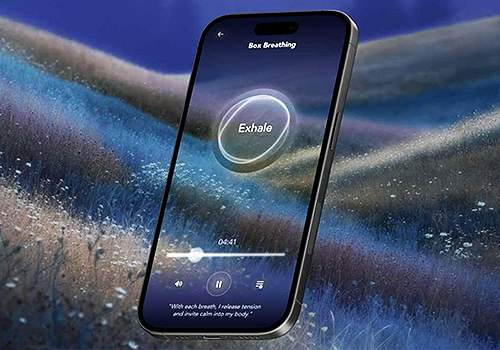
To communicate the message of emotional wellness through Sonara, we focused on crafting a calming, immersive design system that would resonate with users on both an emotional and visual level. One of the key artistic elements we integrated was a rich, soothing visual aesthetic that encourages relaxation. We designed a soft color palette, smooth transitions, and gentle animations to create an atmosphere of tranquility, helping users feel at ease when they interact with the app. In addition to the overall design, we incorporated immersive meditation exercises that guide users through moments of self-reflection and calm. These exercises are carefully structured to evoke a sense of mindfulness, providing users with a space where they can reconnect with their emotions and thoughts without pressure. These meditative experiences are paired with sound design, which further amplifies the calming atmosphere and promotes emotional regulation. A standout feature of Sonara is its interactive animated chatting screen, which plays a critical role in building a human connection between the user and the app. When users interact with Sonara, they’re not just talking to a voice or text—they’re conversing with an empathetic presence. The animation of Sonara is designed to mirror human emotions, with facial expressions, gestures, and eye movements that change based on the user's input. This dynamic interaction makes the app feel more personal, conveying that Sonara truly hears and feels what the user is experiencing. We made sure the UI conveyed empathy by visually showing that Sonara is actively engaged with the user’s feelings. For example, when a user expresses frustration or sadness, Sonara's animated screen reflects a calm, compassionate response, indicating understanding. The app's intuitive feedback system helps users feel heard, reducing feelings of isolation and encouraging them to continue engaging with the app to explore emotional insights and guidance. Ultimately, our goal was to create a platform where users can feel safe and understood—where the technology adapts to their emotional needs and offers comfort, not just through words, but through visual storytelling that reflects the humanity of the experience.
7 How does your creative project contribute to raising awareness, promoting behaviour change, or improving health outcomes?
Our project Sonara plays a pivotal role in raising awareness around the importance of mental health and emotional well-being, especially in an era where stress, anxiety, and depression are increasingly prevalent. By offering an accessible and engaging platform for emotional support, Sonara helps users not only manage their mental health but also recognize the value of taking proactive steps towards emotional self-care. The design of Sonara is rooted in the idea of normalizing mental health care and breaking the stigma around seeking emotional support. By making it easy for users to engage with an AI-driven emotional wellness companion, we aim to encourage more people to seek help, even in situations where traditional therapy might not be immediately available or accessible. Sonara functions as a bridge to open the conversation about mental health, offering a non-judgmental space where individuals can express their emotions and receive tailored support. Our meditation exercises, interactive features, and empathetic conversational interface promote behavior change by guiding users toward mindfulness and emotional regulation. Through regular interaction with Sonara, users can learn valuable coping mechanisms, emotional intelligence skills, and strategies for stress reduction. These behavioral changes, over time, can significantly improve emotional resilience and help prevent more severe mental health issues, leading to better overall well-being. In terms of health outcomes, we designed Sonara to provide measurable improvements in users’ emotional states. Through our continuous user testing and feedback, we’ve observed that Sonara helps users feel more connected, supported, and in control of their emotions. By offering guided exercises and personalized conversations, the app fosters a sense of agency in users, empowering them to make healthier emotional choices. Ultimately, Sonara is designed to be a supportive tool in the user’s mental wellness journey, contributing to improved mental health and better long-term outcomes for emotional well-being.
8 What unique and compelling elements did you incorporate into your advertising materials to capture attention and deliver the health message effectively?
For Sonara, we wanted our advertising to reflect the warmth and personal touch of the product. Here are the three creative pillars that brought our health message to life: 1. A Visual Hug: We crafted a serene, minimalist design that wraps users in a visual embrace—soft pastels and flowing elements create a space where calm and clarity are central, inviting users into a world of peace. 2. Empathy in Motion: We brought Sonara to life through subtle yet expressive animations—imagine a chat that doesn’t just respond, but understands. These animations showcase Sonara’s ability to feel and mirror the user's emotional state, creating a uniquely personal connection. 3. Real Voices, Real Impact: We highlighted authentic user stories—like Sarah’s—showing the deep emotional bond between Sonara and its users. These heartfelt testimonials shine a light on how Sonara is more than a tool—it’s a companion in mental well-being.
9 Congratulations! As a winner of the TITAN Health Awards, what does it mean to you, your company or team to receive this award distinction?
Xenia (Siwen): Thank you! Winning the TITAN Health Awards is both a validation and a motivation for our team. It’s incredibly humbling to be recognized for our efforts to use design and technology to tackle such a critical issue as mental health. This award is not just for Sonara, but for everyone at Perle Studio who’s worked tirelessly to build something meaningful. It signals that we're on the right path, creating innovative solutions that resonate deeply with people’s lives. Maitao: For me, this award reaffirms our mission to integrate empathy and technology. It's a powerful reminder that great design is about more than just aesthetics or functionality—it’s about creating an experience that makes a real difference. The TITAN Health Awards encourages us to keep pushing boundaries, knowing that our work has the potential to change lives for the better. Together: This recognition also gives us the opportunity to amplify our message, gain more visibility, and open doors to collaborate with more like-minded organizations and individuals who are as passionate about mental health as we are. We hope this is just the beginning of many more projects that help people feel seen, heard, and supported in their mental wellness journey.
10 Can you explain a bit about the winning work you entered into the TITAN Health Awards, and why you chose to enter this project?
Xenia (Siwen): Absolutely! Sonara is our first project focused on healthcare, and it holds a special place in our hearts. We chose to enter this project for the TITAN Health Awards because it encapsulates everything we've learned about design, technology, and the importance of mental health. The project represents a unique blend of user-centered design and cutting-edge AI technology aimed at providing emotional support in a way that feels deeply personal and accessible. Maitao: For us, Sonara is more than just a product; it’s a reflection of our commitment to making a real impact on people’s well-being. The combination of immersive visuals, interactive features, and emotionally responsive AI creates a supportive space for users to explore their mental health journey in a way that’s both engaging and meaningful. This project marks our entry into the healthcare space, and it’s been incredibly rewarding to see how well it’s been received. Together: By entering this project into the TITAN Health Awards, we wanted to share our vision of a more compassionate and accessible approach to mental wellness. It's our way of showing how design can be a powerful force in the healthcare industry and that technology can be used to genuinely support people’s emotional well-being.
11 What was the biggest challenge with this project?
Xenia (Siwen): The biggest challenge with Sonara was truly understanding the nuanced needs of users and finding the right balance in addressing them. We wanted to ensure that Sonara provided real emotional support, but without overstepping boundaries—especially given the sensitive nature of mental health. It was crucial for us to design a solution that didn’t feel like a replacement for human interaction but instead acted as a complementary tool to empower users. Maitao: Another challenge was the controversial conversations surrounding the use of AI in healthcare, particularly in the mental wellness space. There’s a lot of skepticism about relying on AI to address emotional and psychological needs, and rightfully so. We had to ensure that Sonara wasn’t merely a "band-aid" for deep, complex issues, but rather a supportive and empathetic presence. Navigating these concerns, while still creating an impactful product, required a delicate balance. Together: Breaking the boundaries of inaccessible mental wellness support was another key challenge. We wanted to design something that was affordable, accessible, and available to everyone—especially given how many people struggle with mental health but can't afford traditional therapy or don’t have access to it. That’s why Sonara is such an important project for us—it aims to democratize mental wellness support, ensuring it’s available for as many people as possible, no matter their circumstances.
12 How has winning an Award developed your practice/career?
Xenia (Siwen): Winning the TITAN Health Awards has been a transformative milestone for both Perle Studio and me personally. It’s given us incredible validation for our approach to combining design and technology in the healthcare space. It has inspired me to push even further in developing human-centered solutions that can have a meaningful impact. This recognition has opened up new conversations with potential collaborators and clients in the healthcare industry, helping us establish our reputation as thought leaders in mental health innovation. Maitao: For me, the award has acted as a catalyst for deepening our focus on cutting-edge technologies like AI in the healthcare sector. It has challenged me to think beyond just creating functional products, and instead consider how we can use technology to be more emotionally intelligent in addressing complex issues like mental health. It’s also expanded our network, connecting us with industry professionals who share our commitment to creating accessible, impactful solutions. Together: The award has also helped us solidify Perle Studio’s vision. We are more determined than ever to create meaningful design that can truly improve lives. It’s made us realize how powerful design can be, especially when paired with technology, to spark change in traditionally underserved areas like mental wellness. Winning this award has given us a platform to share our vision with the world and further develop our practice, knowing that the work we’re doing is making a real difference.
13 What are your top three (3) things you think is unique about the health industry?
1. Complexity and Sensitivity: The health industry is inherently complex, involving a variety of stakeholders, regulations, and ethical considerations. Design and technology solutions must navigate this complexity while being sensitive to individual privacy, emotional well-being, and medical needs. 2. Personalization: Healthcare is deeply personal. Solutions need to account for the uniqueness of each individual’s physical, mental, and emotional health. What works for one person might not work for another, so creating adaptable, personalized experiences is key to success in this field. 3. Human-Centered Innovation: The health industry is unique in how it merges technology with human empathy. It requires a balance between cutting-edge innovation, like AI or telemedicine, and a human touch that genuinely listens and responds to people’s needs. Healthcare solutions must not only solve problems but also make people feel understood, cared for, and supported throughout their journey.
14 What makes your country unique in the health industry?
In both the United States and Canada, the healthcare system faces unique challenges. While Canada offers universal healthcare, the system often experiences long wait times, which can lead to delayed treatment. On the other hand, the U.S. has advanced medical technologies but struggles with accessibility and affordability, leading to disparities in care based on income and insurance status. These challenges make healthcare in North America a dynamic environment where innovation, accessibility, and affordability are constantly at the forefront of discussions. What makes both countries particularly unique is their vast diversity and the need to address health issues at multiple levels. The large multicultural populations in both the U.S. and Canada mean that healthcare solutions must consider a variety of cultural backgrounds, beliefs, and practices. This creates both challenges and opportunities for designing health solutions that cater to different communities, ensuring that wellness support is accessible and meaningful to everyone. Additionally, the increasing demand for mental health services post-COVID has made this a critical area where new solutions are urgently needed.
15 Where do you see the evolution of the health industry going over the next 5-10 years?
Xenia (Siwen): Over the next 5-10 years, I foresee the health industry becoming increasingly integrated with artificial intelligence, wearable technology, and personalized medicine. With advancements in AI, we’ll see a greater ability to predict and treat health conditions before they become critical. Mental health care will likely become more accessible through AI-powered therapeutic tools and virtual support systems, which will be especially important in combating the global mental health crisis. I also see a shift towards more preventative care, where wellness and lifestyle choices are prioritized to prevent illness rather than just treating it once it’s developed. Maitao: I believe that in the coming decade, there will be a massive shift toward data-driven healthcare. We will see health data being continuously collected through devices like wearables, allowing healthcare professionals to have a more comprehensive understanding of a person’s health and well-being. This will lead to more personalized treatment plans and early interventions. Additionally, telemedicine and virtual care will continue to grow, making healthcare more accessible to underserved communities. Finally, I foresee a more holistic approach to health, with technology playing a significant role in bridging mental, physical, and emotional wellness. This will make mental health support and physical healthcare more seamlessly integrated, allowing for more comprehensive and balanced care.
16 What resources would you recommend to someone who wants to improve their skills in the health industry?
To improve skills in the health industry, the most important thing is to truly understand the user/patient’s needs. Whether through cross-disciplinary learning or by studying resources on user-centered design and digital health, gaining a deep understanding of patient experiences and challenges is crucial. For those in tech, resources like MIT OpenCourseWare and O'Reilly are valuable for developing health tech and AI skills. Additionally, attending healthcare innovation conferences and participating in hackathons can provide hands-on learning, while networking and staying up to date with healthcare journals will help you stay connected to the latest trends and challenges in the field.
17 Who has inspired you in your life and why?
We’ve inspired each other in life, as we share a similar background in design and technology but focus on different aspects. Our complementary strengths and perspectives have pushed us to think creatively and tackle challenges in innovative ways. The way we collaborate and learn from each other has been a key driving force in our journey, enabling us to continuously grow both personally and professionally. Our shared passion for blending design and technology has been the foundation for everything we’ve accomplished together.
18 What is your key to success? Any parting words of wisdom?
Our key to success lies in staying curious, embracing collaboration, and always prioritizing the user’s needs. We believe that the best solutions come from an open mind and a willingness to explore new ideas and technologies. Success also comes from persistence—trusting the process, learning from failures, and continually adapting. Our parting words of wisdom would be: stay true to your purpose, build strong partnerships, and never underestimate the power of empathy in everything you create.